

Let's start with some scepticism, because the green cleaning aisle has earned it. "Plant-based," "natural," "chemical-free" (everything is chemicals, including water) — the labels promise the earth and the bottles often deliver lightly scented disappointment. But underneath the marketing, there genuinely are eco-friendly approaches that clean as well as conventional ones. You just have to know which is which.
Eco-Friendly Products That Actually Work: The Short List
Microfiber cloths. The single most impactful green switch, and it's not even a product. Quality microfiber removes up to 99% of bacteria from surfaces with just water, through mechanical action. Most homes could halve their spray-bottle usage with good microfiber alone.
Castile soap. The real plant-based workhorse — effective on floors, counters, and general grime. Diluted properly, it replaces a shelf of single-purpose cleaners.
Hydrogen peroxide (3%). A genuine disinfectant that breaks down into water and oxygen. Excellent on cutting boards, bathroom surfaces, and laundry whitening. Keep it in the dark bottle it comes in — light degrades it.
Baking soda. Mild abrasive and odour absorber. Great for sinks, tubs, and deodorizing. Not a disinfectant, despite what the internet claims — it's a cleaner, and that's fine.
Steam. A good steam mop sanitizes hard floors with zero chemicals. For Edmonton homes fighting winter salt residue, steam is genuinely one of the best tools available.
The Ones to Skip (or Use Carefully)
- Vinegar on stone. Vinegar is a decent glass and limescale cleaner, but its acidity etches marble, granite, and natural stone. Expensive mistake.
- Essential oils as "disinfectants." Tea tree oil smells nice. It is not a registered disinfectant. Don't rely on it where hygiene matters.
- DIY mixes from social media. Vinegar + baking soda in the same bottle neutralizes into salty water. Bleach + anything acidic creates toxic gas. The classics are classic for a reason — and the experiments belong nowhere near your home.
- "Chemical-free" claims. Meaningless marketing. Judge products by third-party certifications (EcoLogo, Green Seal, EPA Safer Choice), not adjectives.
Reading Labels Like a Pro
Forget the front of the bottle; the truth is on the back. Look for third-party certifications — EcoLogo, Green Seal, or EPA Safer Choice — which mean an independent body verified the claims. Check the ingredient list for what actually does the cleaning: surfactants (the cleaners), solvents, and acids or bases. Be wary of "fragrance" listed without detail — it's a blanket term that can hide dozens of compounds, including phthalates. And remember that "biodegradable" without a timeframe is meaningless; everything biodegrades eventually, including plastic. A product that names its ingredients, carries a real certification, and tells you what it doesn't do is usually the honest one.
When Green Isn't Enough
Honesty matters here: some jobs need stronger chemistry. Heavy grout restoration, serious limescale, post-construction fine dust — green products can struggle, and pretending otherwise wastes your money. A good eco-minded cleaner tells you this upfront and uses the minimum effective product, rather than either greenwashing or over-applying harsh chemicals. That's our policy on every eco-friendly clean.
What We Actually Use
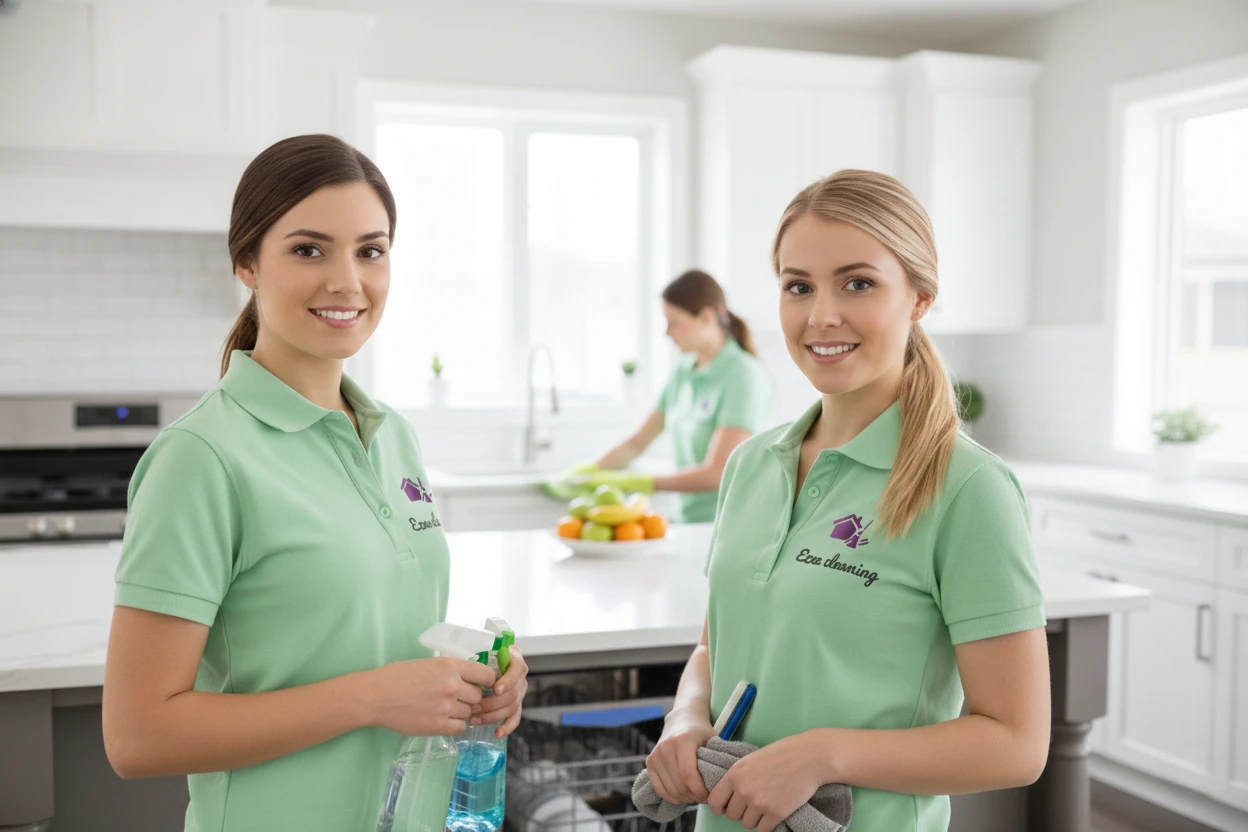
Our kits centre on concentrated plant-based cleaners (less packaging, less transport), microfiber systems colour-coded by area (no cross-contamination between bathrooms and kitchens), and HEPA-filter vacuums. No harsh fumes, safe around kids and pets once dry, and — the part that matters — the results hold up against any conventional clean. See our pricing or ask us what's in the kit; we're an open book about it.
Start With Three Swaps
If you're converting your home to greener cleaning, don't overhaul everything at once — you'll quit by week two. Start with three swaps that cover 80% of daily cleaning: quality microfiber cloths (damp, for almost all surfaces), a castile-soap all-purpose spray, and 3% hydrogen peroxide for the places that need actual disinfecting. Use those for a month. You'll learn what they handle easily and where you still reach for something stronger — and that is useful information, because it tells you exactly which specialty products are worth buying green and which jobs genuinely need conventional chemistry. Sustainable cleaning isn't about purity; it's about using the gentlest thing that actually works, every time. And if a product's green claims sound too good to be true — cleans everything, zero effort, smells like a meadow — they probably are.